
AI Business
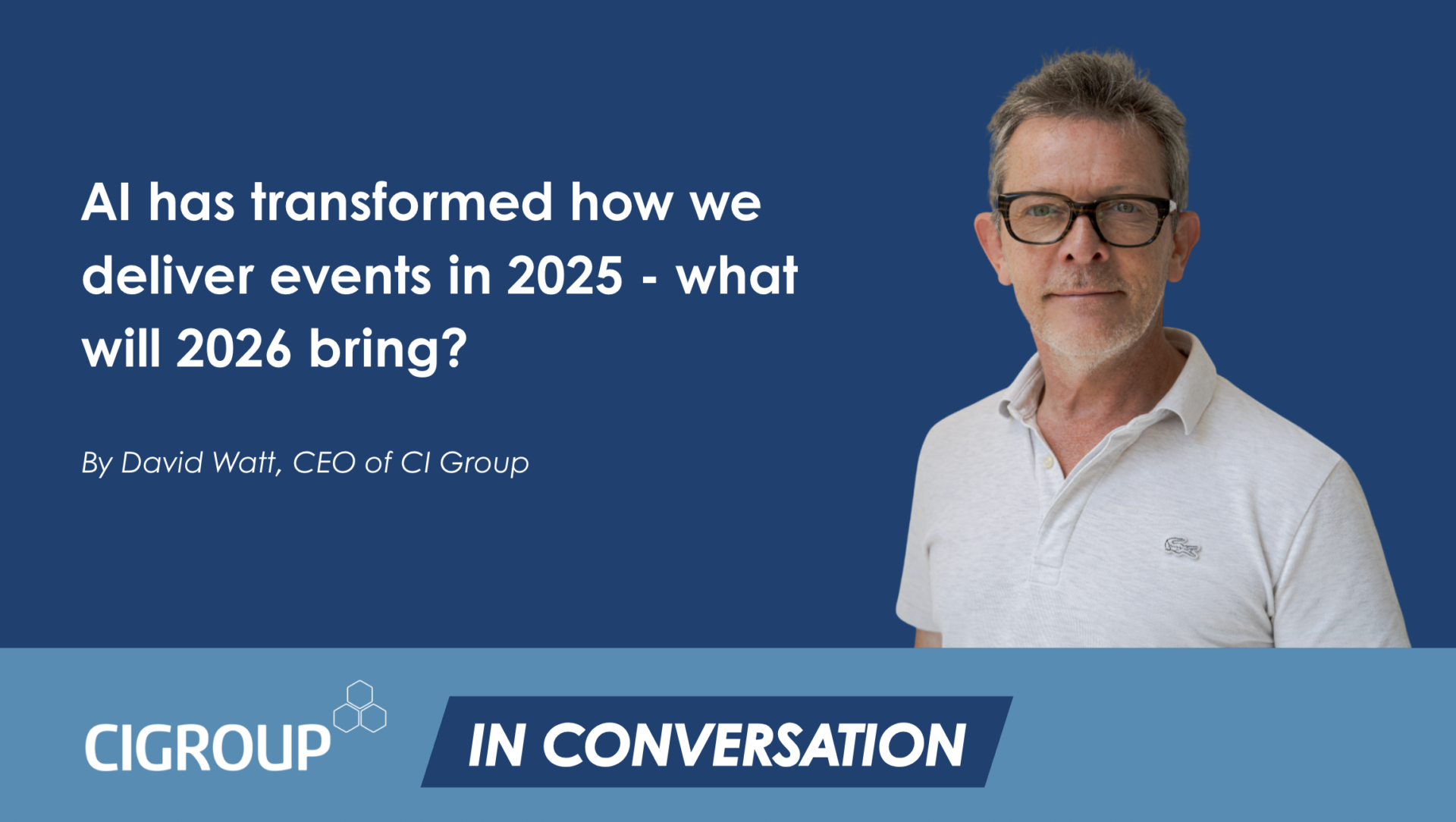
AI has transformed how we deliver events in 2025 – what 2026 will bring?
Written by David Watt, CEO of CI Group
This year has marked a significant turning point in the events industry. Research from Event Industry News reported 45% of UK event organisers are now actively using AI tools within their operations, and in my conversations with clients and partners that figure feels very real on the ground. For many of us, 2025 has been a year of hands-on experimentation – dabbling with different AI tools, putting them to the test, and discovering where it can genuinely add value to how we deliver events. From smarter planning, sharper personalisation and more informed decision-making – below, I explore the key ways organisers have been using AI to enhance their conferences and trade shows in 2025, and how we can expect this to evolve in 2026.
Programme design and marketing
This is where AI has had the most immediate impact. Generative tools have proven incredibly powerful in drafting agendas, refining abstracts and copy, and personalising email campaigns at scale that typically require significant time.
Organisers are also using AI to mine historic data when shaping programmes. By analysing registrations, engagement metrics, survey comments and on‑site movement together, they can see which topics, formats and speakers resonate – and make bolder decisions about what to grow and what to retire.
Attendee experience and matchmaking
Delegates now expect consumer-grade digital journey, and networking is becoming more intentional. AI aids the recommendation engines within event apps by assessing attendee interests and roles, and proposing suggestions on who to meet, sessions to attend, and building personalised paths through dense programmes and venue floors. This helps attendees to find content most relevant to them, and ensures that hosted-buyer or roundtable meeting formats are more likely to lead to meaningful outcomes.
Operational optimisation on-site
Behind the scenes, AI is becoming a highly valuable part of the operational control room. Forecasting tools track registration curves, peak traffic times, and no-show and room-fill rates using historic and live data, giving teams stronger evidence when making decisions about agenda structure, and space and staff allocation. Reducing over or under‑allocation of space and resources can make a significant difference to event viability, and enables smarter use of budgets.
Data, follow-up and future planning
The major shift after the doors close is how feedback is handled. Instead of manually sifting through survey responses and Q&A logs, organisers can now use AI to summarise sentiment, surface recurring themes and highlight features or sessions that either resonated well or didn’t – accelerating debriefs and informing decision-making for the next event’s strategy.
AI is also helping segment attendees and exhibitors for follow-up. Rather than a single generic message, systems support tailored content based on behaviour and interests, nurturing leads with greater relevance.
What is 2026 likely to bring?
Looking ahead, what’s clear is that AI will move on from feeling like an experiment for organisers, and become a permanent part of how conferences and trade shows are delivered. Wider technology forecasts for 2026 point to generative AI being embedded inside existing systems as built‑in tools within CRMs and project management platforms; as these capabilities mature, we should see stronger personalisation for attendees and more powerful predictive analytics for pricing, sustainability and operational planning.
Against this backdrop, and with AI expected to add billions in value to the wider economy over the coming years, CI Group has launched its own AI‑powered business unit, sami, dedicated to turning AI strategy into tangible results across clients’ event and marketing activity. As we enter the new year at this pivotal moment in the AI landscape, the industry has a real opportunity to use the technology to make budgets work harder and maximise impact.
Below are my top recommended AI tools for organisers:
- Grip: An event platform that drives smarter networking and meetings with personalised matchmaking recommendations.
- Zoho Analytics: An analytics tool that pulls together event data to identify trends, performance and ROI across campaigns and sessions.
- Datapad: A real-time analytics tool that gives insights into traffic and anomalies on the show floor.
- ChatGPT: An AI assistant that can draft agendas, abstracts and marketing copy.
For organisers who are keen to learn more about AI technology itself and where it’s taking us, Event Industry News How AI Will Transform the Event Industry, and Garter’s When to Use or Not Use AI Agents reports offer valuable guidance.
My advice to fellow organisers is to experiment with the technology with intent. Consider the problems you want it to solve, involve your teams – and importantly, consistently remain open to the opportunities it can offer in delivering more impactful events for both our audiences, and the stakeholders who depend on them.
Contact marketing@cigroup.co.uk to speak to our team about how sami can help your organisation successfully and responsibly adopt AI, with solutions focused on your individual goals and challenges.